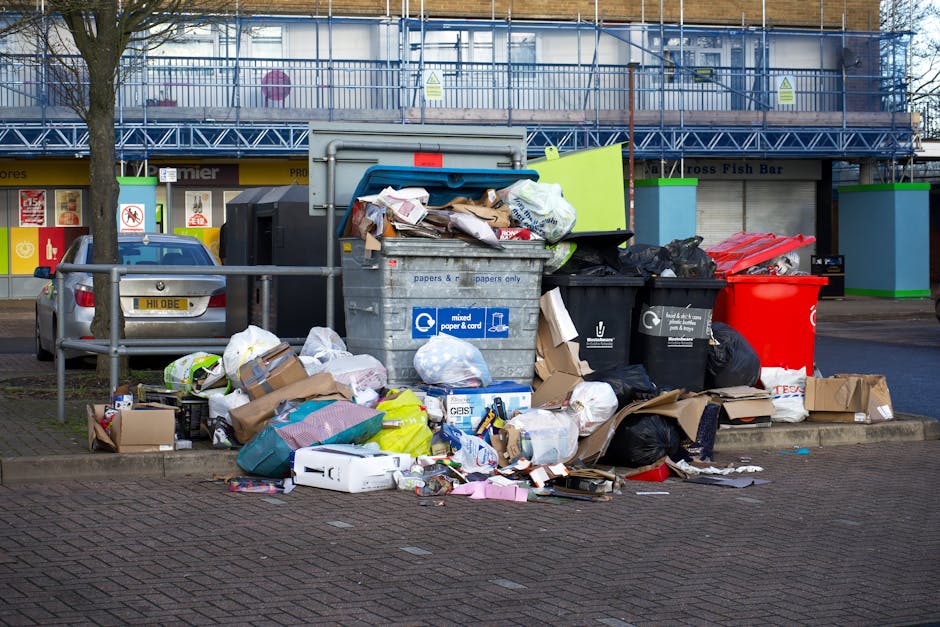
Church Road office rubbish removal Wimbledon for local businesses: a practical guide for busy teams
If you run a business on or near Church Road, you already know how quickly office clutter builds up. Broken chairs get tucked into corners, old filing cabinets linger in meeting rooms, and that one storage area somehow turns into a mini landfill by Friday. Church Road office rubbish removal Wimbledon for local businesses is not just about tidying up. It is about keeping your workplace safe, presentable, efficient, and ready for clients, staff, and deliveries without the chaos.
This guide walks through what office rubbish removal involves, how the process works in practice, which businesses benefit most, and what to look out for if you want a smooth, compliant clearance. You will also find a checklist, a comparison table, and some straight-talking tips from the real world. No fluff. Just useful advice that helps you make a sensible decision.
Table of Contents
- Why Church Road office rubbish removal Wimbledon for local businesses Matters
- How Church Road office rubbish removal Wimbledon for local businesses Works
- Key Benefits and Practical Advantages
- Who This Is For and When It Makes Sense
- Step-by-Step Guidance
- Expert Tips for Better Results
- Common Mistakes to Avoid
- Tools, Resources and Recommendations
- Law, Compliance, Standards, or Best Practice
- Options, Methods, or Comparison Table
- Case Study or Real-World Example
- Practical Checklist
- Conclusion
- Frequently Asked Questions
Why Church Road office rubbish removal Wimbledon for local businesses Matters
Office waste is not just "stuff to get rid of". In a busy Wimbledon business, it affects how your premises function day to day. When spare desks block a corridor, or old boxes pile up near reception, the space starts to work against you. It looks untidy, makes cleaning harder, and can slow down staff who just want to get on with things.
Church Road has the kind of local business mix where image matters. Professional services, small studios, consultancies, clinics, agencies, and independent offices all tend to rely on a calm, organised workspace. If your office feels cluttered, people notice. Clients notice. So do staff. And honestly, so do you, usually at the worst possible moment, like five minutes before a meeting.
There is also a practical side. Waste left sitting around can create trip hazards, block fire exits, and make it harder to keep on top of cleaning and facilities management. That is especially relevant if your business has regular foot traffic, shared spaces, or a tight back-of-house area. A proper office clearance helps reset the space rather than simply move the problem from one corner to another.
If you already manage wider commercial waste streams, it can be useful to think of office rubbish removal as a one-off or periodic deep clear rather than day-to-day disposal. For ongoing needs, the broader approach of business waste removal may make more sense, while an office-specific clearance is ideal when you need a bigger reset.
Expert summary: the best office rubbish removal service is the one that clears quickly, protects your working hours, handles mixed items responsibly, and leaves you with a usable office again.
How Church Road office rubbish removal Wimbledon for local businesses Works
In most cases, the process is refreshingly simple. A business contacts a clearance provider, explains what needs removing, and agrees a suitable time. Then the team turns up, assesses the load, removes the unwanted items, and takes them away for sorting, reuse, recycling, or disposal. That is the short version, anyway.
The better services do not just "load and go". They separate recyclable materials where possible, handle bulky furniture with care, and make sure the site is left tidy. If you have confidential paperwork, IT kit, appliances, or awkward office furniture, it helps to mention that at the start. Saves a lot of back-and-forth later.
For many Wimbledon businesses, speed matters as much as the clearance itself. Maybe you are reconfiguring a room before Monday morning. Maybe a lease is ending. Maybe the office has been refreshing its layout and there is an ugly pile of surplus furniture that has started to feel permanent. A good team works around your business hours where possible, which is often the difference between a smooth job and a week of disruption.
If your clearance includes desks, shelving, seating, or cupboards, you may also want to review related services such as office clearance and furniture disposal. That helps you match the job to the right kind of removal rather than guessing and hoping for the best.
What typically gets removed
- Office desks and chairs
- Filing cabinets and storage units
- Reception furniture
- Boxes, packaging, and general clutter
- Outdated shelving and fixtures
- Broken small appliances where appropriate
- Mixed office rubbish from refurbishments or relocations
Some items need special handling. If you are dealing with appliances or anything that may fall into a specialist category, you should ask in advance whether it needs a separate arrangement such as fridge and appliance removal or hazardous waste disposal.
Key Benefits and Practical Advantages
The biggest benefit is obvious: a clean office is easier to work in. But there is more to it than that. A proper clearance can improve workflow, reduce stress, and help your team focus on actual work instead of stepping around old furniture for a week. Sounds small. It really is not.
For local businesses, another major advantage is flexibility. Office clearances can often be arranged around opening hours, quieter days, or phased room-by-room access. That means less interruption for staff and fewer awkward moments for clients walking past a pile of unwanted chairs. Let's face it, that never looks ideal.
There is also a sustainability angle. A responsible clearance provider will aim to sort items sensibly, which is better than dumping everything into one mixed load and hoping for the best. If you care about environmental practice, or you simply do not want usable furniture going to waste, that matters. You can read more about the general approach through recycling and sustainability.
Other practical advantages include:
- Improved safety in corridors, storerooms, and shared areas
- Better first impressions for visitors and clients
- Quicker turnaround during office moves or refits
- Less strain on your internal team
- More predictable project planning
Truth be told, a lot of businesses wait until the clutter becomes impossible to ignore. That is human enough. But if you act earlier, the job is usually cheaper, quicker, and far less stressful.
Who This Is For and When It Makes Sense
Church Road office rubbish removal Wimbledon for local businesses is relevant to a wide mix of organisations. It is not only for large offices or major relocations. In fact, smaller firms often get the most immediate benefit because they feel clutter impact more sharply in limited space.
This type of service makes sense if you are:
- Moving to new premises or downsizing
- Replacing old office furniture
- Clearing a storage room or archive area
- Preparing for a refurbishment
- Closing a satellite office or unused workspace
- Sorting out accumulated rubbish after a busy trading period
It is also a useful option for businesses that are not quite ready for full commercial waste contracts but need a one-off clearance. If the job involves mixed business waste rather than just office furniture, the broader waste removal service can be a better fit.
We often find that professional firms with limited backroom storage are the first to feel the pinch. The printer boxes, old monitors, out-of-date promotional stands, and spare office chairs somehow multiply overnight. You know the feeling.
Step-by-Step Guidance
If you want the process to run smoothly, it helps to treat the clearance like a small project rather than an emergency tidy-up. Here is a simple way to organise it.
- Walk the space first. Identify everything that needs to go, room by room. Do not rely on memory; memory is usually optimistic.
- Separate obvious categories. Furniture, general rubbish, confidential materials, appliances, and anything potentially hazardous should be kept distinct where possible.
- Flag access issues. Note stairs, narrow corridors, lift restrictions, parking limitations, and time windows for access.
- Check for special items. If you have confidential paperwork, glass, electronics, or restricted waste, mention it early.
- Request a clear quote. Ask what is included, whether labour is covered, and how the final price is calculated.
- Book a practical time slot. Try to avoid peak client hours if the space is customer-facing.
- Prepare the site. Make items easy to reach where possible. Even a few minutes of preparation can speed things up.
- Confirm the handover. Once the clearance is complete, check the room, especially corners, under desks, and storage areas that are easy to overlook.
If confidential files are part of the job, do not just put them in a normal mixed bag and hope it is fine. A service such as confidential shredding is the safer, more professional choice. It also gives everyone a bit of peace of mind, which is worth a lot in an office setting.
Expert Tips for Better Results
One useful habit is to declutter before you book. Not aggressively, not in some dramatic office purge. Just enough to avoid paying to remove things you would have kept if you had looked at them more carefully. It happens all the time. A dusty whiteboard or two, a chair someone was "about to fix", and a box of cables that may or may not be useful can quietly turn a clearance into a bigger job.
Another tip: take photos before the booking if the office is cramped or the load is mixed. That makes quoting easier and reduces surprises on the day. It is also helpful if access is unusual, like a shared entrance or a courtyard that gets busy around lunchtime. Small detail, big difference.
For fit-outs, refurbishments, or office strip-outs, it can help to pair office clearance with builders waste clearance if there is rubble, packaging, or renovation debris involved. That keeps the waste streams cleaner and the job more straightforward.
Some additional best-practice ideas:
- Keep a simple inventory of items to remove
- Separate anything reusable from true waste
- Label storage areas before the team arrives
- Make sure someone is available to confirm access and answer questions
- Choose a slot that does not clash with client visits or deliveries
And yes, it is worth saying: the tidier the workspace is before removal, the less likely it is that something important gets accidentally taken. Sounds obvious. Yet offices are busy, and obvious things get missed.
Common Mistakes to Avoid
Most clearance problems come from poor preparation rather than the removal itself. The first common mistake is underestimating how much is actually there. A room that looks like "a few items" can become three loads once everything is pulled out and stacked together.
Another mistake is not separating sensitive materials. Paper records, client documents, hard drives, and old devices should be handled with care. If you are unsure, stop and ask. Better that than a messy compliance headache later.
People also sometimes forget access details. In Wimbledon, where parking and loading arrangements can be tight, that matters more than you might think. If a clearance team arrives and cannot get close to the building, the job can slow down quickly. A little warning goes a long way.
Other avoidable mistakes include:
- Leaving the booking too late before a move-out deadline
- Mixing general waste with items that need special handling
- Choosing a provider without checking what is included
- Assuming all office items can be removed the same way
- Ignoring safety issues in hallways, storerooms, or basements
There is a temptation to rush. Fair enough, especially if the lease end date is staring at you. But a rushed clearance often creates extra work. Slow is not the right word. Planned is better.
Tools, Resources and Recommendations
You do not need a complicated toolkit to organise an office clearance, just a few practical aids. A phone camera, a spreadsheet or basic note list, labels, tape, and a bin bag supply usually get the job done. If the space is large, a floor plan or room-by-room list helps more than people expect.
For resource planning, it is worth reviewing the different types of clearance your business might need over time. Office jobs sometimes overlap with furniture removal, general waste collection, or even appliance disposal. The following pages can help you think through the wider picture:
- office clearance for workspaces, furniture, and surplus office items
- furniture clearance if the job is mostly desks, chairs, and storage units
- fridge and appliance removal for items that need a more specific approach
- what can go in a skip if you are comparing clearance options
One recommendation stands out above the rest: be honest about the volume and type of waste. Estimating low might feel convenient at the start, but it usually leads to delays or extra cost later. No one enjoys that conversation.
Law, Compliance, Standards, or Best Practice
For businesses in the UK, office waste needs to be managed responsibly. You do not need to be a legal expert to do the right thing, but you do need to avoid careless handling. That means using a provider that understands how to sort, transport, and dispose of business waste properly, especially where confidential or potentially sensitive material is involved.
If your office contains items that could be classed as hazardous or require special handling, they should not be lumped in with ordinary rubbish. That includes certain cleaning products, chemicals, damaged equipment with residues, or waste that has come from specific trades or maintenance work. When in doubt, ask for guidance rather than guessing. Guessing is rarely the best policy with waste.
Best practice for local businesses generally includes:
- Keeping waste streams sensible and clearly separated where practical
- Protecting confidential information through secure destruction methods
- Using insured, safety-conscious removal services
- Documenting what leaves the premises where your internal processes require it
- Considering sustainability and reuse before disposal
For reassurance on business standards and service approach, it is helpful to review company information such as health and safety policy, insurance and safety, payment and security, and about us. Those pages give a better sense of how a provider thinks about trust, responsibility, and customer care.
Options, Methods, or Comparison Table
If you are deciding how to handle office rubbish, the main options usually fall into three categories. Each has its place. The right one depends on volume, timing, and how hands-on you want to be.
| Method | Best for | Strengths | Limitations |
|---|---|---|---|
| Office rubbish removal service | Mixed office waste, bulky items, quick clearances | Fast, flexible, low disruption, labour included | May not suit ongoing high-volume waste streams |
| Regular commercial waste collection | Repeat waste from day-to-day operations | Reliable routine collection, good for steady output | Less ideal for one-off bulk clearances |
| Skip-style approach | Longer projects or larger mixed waste loads | Useful for ongoing refurbishment work | Needs space, permits may be relevant, and loading is DIY |
If your job is mostly furniture, a furniture-led service may be enough. If it includes mixed rubbish, packing waste, and room clear-outs, a more comprehensive commercial clearance is usually simpler. If the office is tiny and access is awkward, the convenience of a hands-on removal service can easily outweigh other options.
Case Study or Real-World Example
A small Wimbledon marketing agency on Church Road decides to refresh its office after a year of hybrid working. The back room has become a catch-all space: two old desks, a damaged storage cabinet, several boxes of archived paperwork, a broken task chair, and a pile of packaging from recent equipment purchases. Nothing dramatic. Just enough clutter to annoy everyone each time they pass the door.
The team takes an afternoon to sort items into keep, shred, recycle, and remove. They arrange collection for early morning before staff arrive, which keeps disruption low. The office manager flags that the building entrance is narrow and asks for care around the reception area. The clearance is completed in one visit, the room is left clear, and the agency turns the space into a proper quiet work zone.
Was it a huge project? Not really. But it changed the feel of the office straight away. Less mess, less noise, less "we should really do something about that room". Small win, but a real one.
Practical Checklist
Use this checklist before booking Church Road office rubbish removal Wimbledon for local businesses:
- Identify all items to be removed
- Separate furniture, rubbish, paperwork, electronics, and any special waste
- Check access routes, stairs, lifts, and parking constraints
- Remove any items you want to keep before the team arrives
- Flag confidential files for secure handling
- Ask about insurance, safety, and waste handling practice
- Confirm the date, time, and expected duration
- Ask what is included in the quote
- Prepare someone to meet the team onsite if needed
- Walk through the space after removal to make sure nothing important was left behind
That last step sounds almost too simple, but it catches the little things. A cable tucked under a desk. A box in the corner. The sort of thing that gets missed when everyone is in a hurry.
Get a free quote today and see how much you can save.
Conclusion
Church Road office rubbish removal Wimbledon for local businesses is really about keeping your workspace working. It helps you free up room, protect staff and visitors, reduce visual clutter, and handle unwanted items in a more responsible way. Whether you are clearing a single office, refreshing a shared space, or preparing for a move, a well-planned removal saves time and avoids a lot of frustration.
The key is to choose a service that understands the practical side of business premises: access, timing, confidentiality, safety, and the need to get things done without drama. A good office clearance should feel calm, organised, and surprisingly easy. That is the goal, anyway. And in a busy Wimbledon week, calm is no small thing.
Frequently Asked Questions
What does Church Road office rubbish removal usually include?
It usually includes the removal of office furniture, general rubbish, packaging, surplus equipment, and other unwanted items from a business workspace. The exact scope depends on the provider and the type of waste involved.
Is office rubbish removal suitable for small local businesses?
Yes. In fact, small businesses often benefit the most because even a modest amount of clutter can reduce usable space very quickly. A small clearance can make a big difference in a compact office.
How is office rubbish removal different from regular waste collection?
Regular waste collection is designed for ongoing day-to-day rubbish. Office rubbish removal is better for one-off clearances, bulk items, refurbishments, relocations, or situations where a lot of mixed waste needs to go at once.
Can confidential paperwork be included in an office clearance?
Yes, but it should be handled securely. If you need confidential documents destroyed properly, it is better to arrange a dedicated service such as confidential shredding rather than putting everything into general waste.
Do I need to sort office items before booking?
It helps a great deal. Sorting items into furniture, rubbish, electronics, and sensitive materials makes quoting easier and usually speeds up the job on the day. A little prep goes a long way.
What if my office has awkward access or no easy parking?
Tell the provider in advance. Narrow hallways, stairs, limited parking, and shared entrances are all manageable, but they need to be planned for. In Wimbledon, access planning is often half the battle.
Can old office furniture be removed responsibly?
Yes. A good provider will aim to reuse, recycle, or sort furniture appropriately where possible. If the items are in usable condition, some may be handled through furniture clearance or furniture disposal rather than treated as ordinary waste.
What should I do with old appliances or electronics?
Check first before placing them in a general office load. Some appliances need specific handling, and electronic items may need extra care depending on their condition and type. If in doubt, ask before collection.
How do I know if I need a one-off clearance or regular business waste removal?
If you have a recurring flow of waste, regular business waste removal makes sense. If you are clearing a room, moving office, or dealing with a sudden build-up of clutter, a one-off office rubbish removal is usually the better fit.
Is office rubbish removal disruptive to staff?
It does not have to be. With the right timing and good access planning, the job can be completed with limited interruption. Early morning or quieter periods often work best for customer-facing businesses.
What should I ask before I book a clearance service?
Ask what is included, how access is handled, whether labour is part of the price, how special items are treated, and what happens to recyclable waste. Those questions save headaches later, honestly.
Where can I learn more about your wider services and policies?
You can review pages such as pricing and quotes, recycling and sustainability, and contact us to get a clearer picture of how the service works and what to expect.